We flew back to Lima early on day 7, just in case our flight was canceled and we needed later options. After talking to several people who visited Lima and the city center, I had the impression it wasn’t worth more than a day or two. After going I think we could have spent a day or two more, but also didn’t leave feeling I missed out on too much. Two to four days certainly seems sufficient.
We arrived at Lima airport and used Taxitadum to get to our hotel in Miraflores. Miraflores is pretty far from the city center but highly recommended for tourists. Safety is apparently a huge concern in most of Lima. In hindsight, for what we had planned, I should have researched safe areas in the city center. Miraflores is right on the coast and definitely a beachy tourist destination. Being from Florida, we weren’t interested in the beaches. For more on our hotel, check out the accommodations post coming soon!
Touring Lima City Center
We enjoyed the walking tour in Cusco by Inkan Milky Way and were happy to use them again. There are two options for their free walking tour: 1) You can meet in Miraflores and catch the bus with them to Lima city center; 2) You can also meet them at the tour starting point, La Merced Church. We opted to uber back to the city and meet at the church. The tour itself is about 2.5 hours if you do not include the bus from Miraflores.
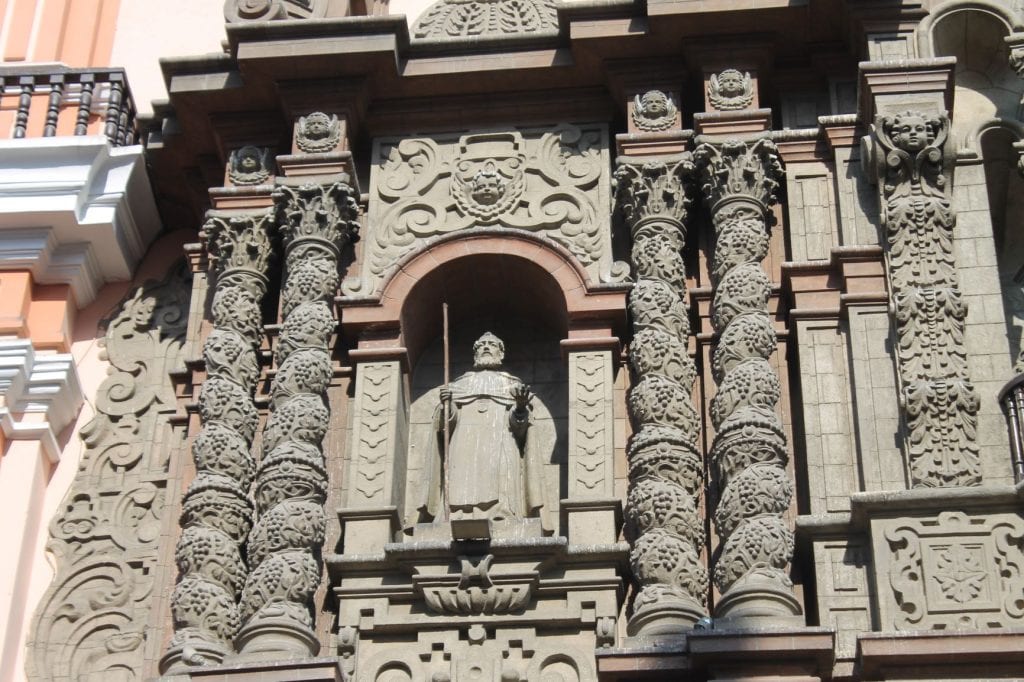
La Merced Church
It is said they celebrated the first Holy Mass of Lima here in 1534. Friar Miguel de Orenes began construction of the church in 1535. The building, originally wood, underwent remodeling many, many times due to both earthquakes and fire as was much of lima.
The ornate baroque style church is similar to the other churches found throughout much of Peru. The portal, or entrance to the church, however, is really quite stunning. Carved from granite, it seems almost out of place compared to the rest of the building exterior. They did not allow pictures inside, but similar to other churches we saw, it contained lots of gilded and ornate niches.


The Plaza de Armas
Our tour next took us to what is essentially the heart of the city and the government. This giant square contains the Government Palace (aka House of Pizarro), the Municipal Palace of Lima (City Hall), the Archbishop’s Palace of Lima, the Cathedral of Lima, along with several other buildings. The tour did not take us into any of the buildings but our guide explained the purpose of several of them.
The Government Palace is the official home of the President of Peru. There is a Changing of the Guard ceremony that happens daily at noon in front of the palace. While the Government Palace houses the executive branch of the Peruvian government, the Municipal Palace houses the local city government. Standing opposite the Municipal Palace is the Archbishop’s Palace of Lima. This is the residence of the Archbishop and administrative headquarters for the church in Lima. Directly next door is the Cathedral of Lima.

Government Palace 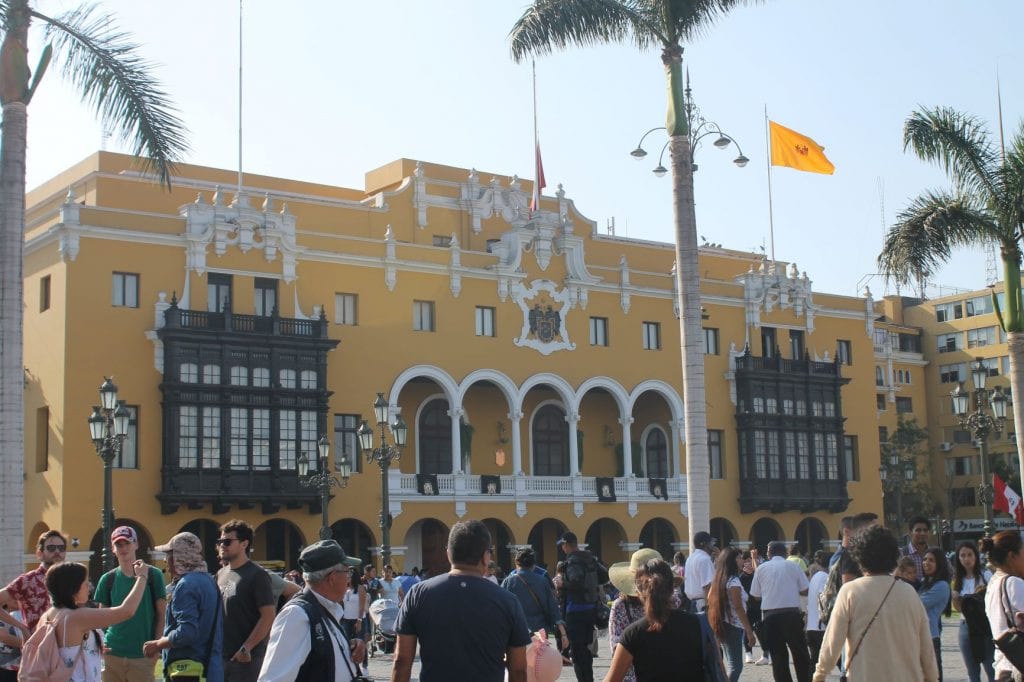
Municipal Palace 
Archbishop’s Palace 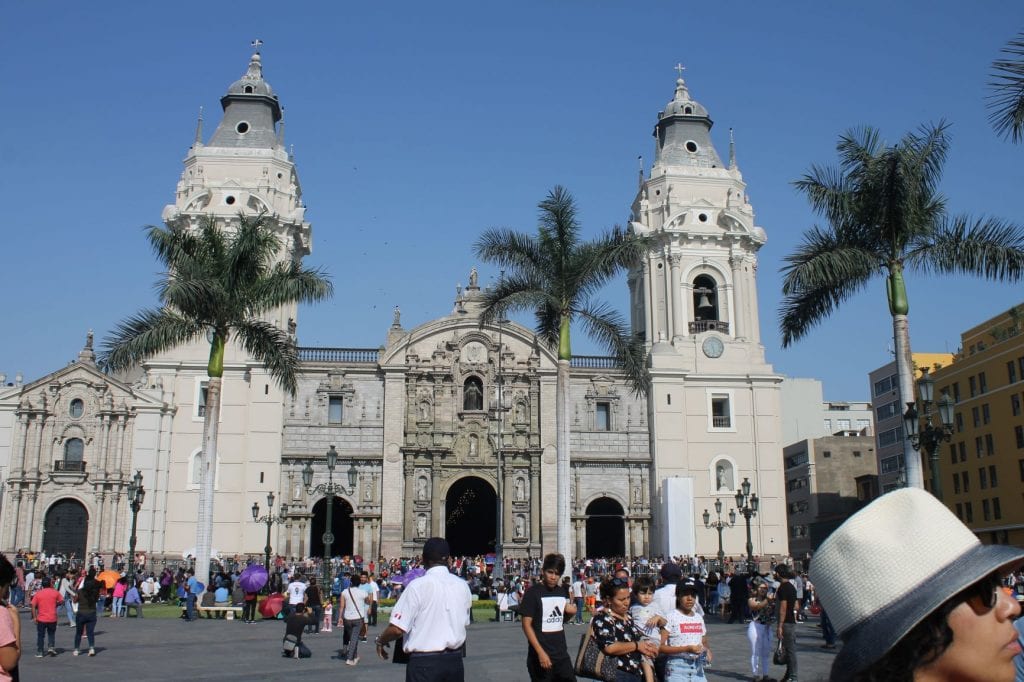
Cathedral of Lima
It struck me that they have so much power in one single square. The threats of today’s society made me wonder what would happen if the area was targeted. Our guide did mention that it is rare for all parties to be in the plaza at the same time, as these were just the “official” residences.
Santo Domingo Church
This church was first established in the 16th century by a Dominican friar. It took more than 50 years to build, only to be destroyed completely by an earthquake in 1678. Rebuilding Lima has occurred several times due to these earthquakes. Clearly the Spanish did not have the construction skills or knowledge that the Incas did.
Our tour allowed us to visit the central nave interior. It has many altarpieces dedicated to various saints. Several Peruvian saints have their own section of the church. Their altarpieces allegedly hold the remains of each Peruvian saint. There was a service going on so we tried to be respectful and did not take many pictures.


Rimac District, Outside Lima City Center
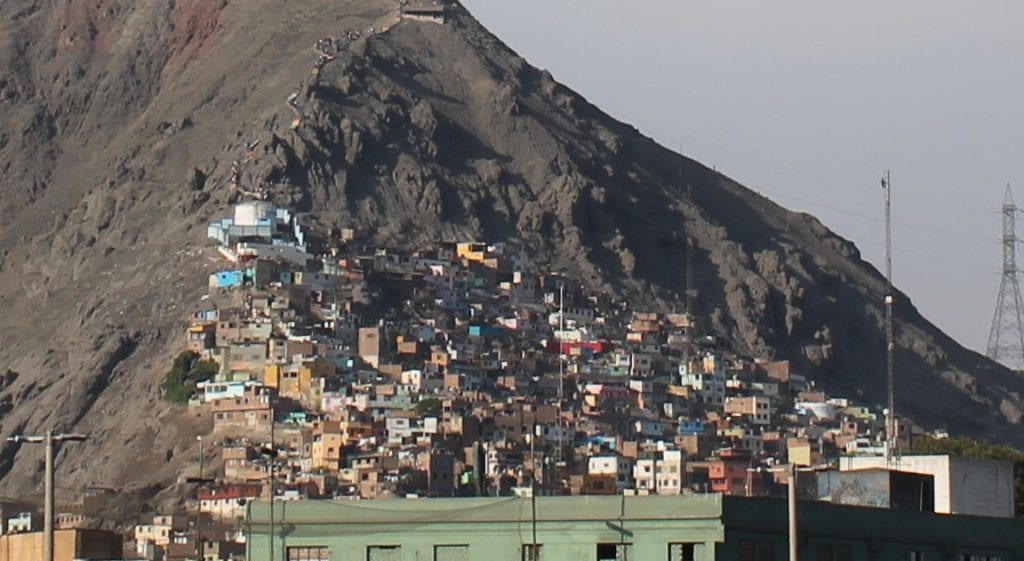
Our guide took us to the Rimac River so he could tell us about the socio-economic reality of many of the people in Lima. While standing on the bridge over the river, he explained that most of the homes to the north have little to no electricity. Even if they are hooked up, it cuts out so frequently they may as well not have it. He told us he fully expected to be without power when he went home for the day. Shantytowns, or pueblo jóvenes, now overrun the majority of Northern Rimac. Crossing the river is like crossing into another world. It was a stark contrast to the beautiful buildings of the Plaza de Armas.
Old Train Station and House of Peruvian Literature
Lima no longer offers passenger rail service so the Peruvian government transformed the old train station into a beautiful library and cultural center. Inside you will find a beautiful stained glass ceiling in a classic train station style. They have also kept other elements of the train station like the original ticket booths. On the front of the building, they kept the original clock standard for so many historic train stations. The library itself showcases several Peruvian writers and emphasizes the importance of education and literature.


Our tour ended at the exterior of the Basílica de San Francisco, which Tereza and I decided to come back and visit the next day. More on that when I post about our final day in Peru.
For more pictures, please check out the Day 7on our Travel Labyrinth Facebook page. Viewing our public photos does not require a Facebook account.